


About Us
Established in 2011 as a voluntary association and then as a Non for Profit organisation in 2013, Participatory Guarantee Systems South Africa (PGS SA) is the body representing PGS groups in the country. It is dedicated to supporting the establishment of provincial communities of practice and PGS groups that help facilitate local market access for organic and agroecological farmers.
IFOAM-Organics International, an international body promoting organic agriculture worldwide, recognised the need to support assurance systems suited to smallholder agriculture and local markets. They articulated the basic elements and key features of existing smallholder farmer organisations worldwide that were working in a participatory way with consumers and local markets and classified these assurance systems as Participatory Guarantee Systems.
“Participatory Guarantee Systems (PGS) are locally focused quality assurance systems. They certify producers based on active participation of stakeholders and are built on a foundation of trust, social networks and knowledge exchange.” IFOAM – Organics International
PGS SA assists smallholder farmer groups to harness the economic, environmental and social potential of organic farming in order to develop local food systems that are climate resilient and keep soils and people healthy. This transparent, producer-focused system assures consumers of the integrity of organic products and links producers into a community of practice through knowledge exchanges, whilst developing consumer awareness around ethical choices that support local economic development.
PGS groups drive food sovereignty through localised, farmer-driven food systems based on community participation, transparency and trust. They are key to galvanising local food systems and bringing collaboration between stakeholders in regional value chains.
PGS SA achieves this in the following ways:

Training of smallholder farmers using organic and agroecology principles

PGS SA promotes the development of organic farmer organisation (OFO) in collaboration with INOFO South Africa and the seeding of grassroots PGS groups through the PGS Pollinator and Co-pollinator Programmes.

Developing sustainable short value chains

Creating knowledge resources for smallholder farmers’ adoption of PGS
PGS Guiding Elements

Shared Vision

Trust

Horizontality

Transparency

Participatory

Learning Process
Learn More
Our Team

Matthew Purkis
PGS SA Chairperson
Matthew is an entrepreneur, ecological designer, practitioner, and organic food systems advocate.

Butshabelo Mabunda
PGS SA vice-Chairperson
Butshabelo is passionate about agroecological practices that feed the nation with nutritious and healthy food.

Raymond Auerbach
PGS SA Treasurer

Sasha Mentz
Secretary and national PGS coordinator
Sasha is a small-scale organic farmer and advocacy researcher, she is project manager for PGS SA and a PGS practitioner herself.
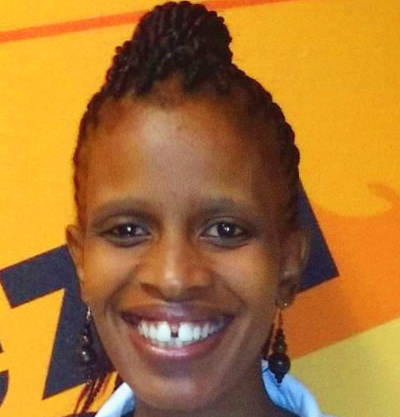
Nthatise Maphasa
Administrative and Communications liaison
Nthatise is zealous about indigenous organic agronomic practices, entrepreneur and is an agriculturalist
Provincial PGS SA Representatives
Reach out to the convenor of the working group you are keen to be part of to contribute to the SA organic sector
SAOSO and PGS SA have developed to a point where many activities are already being carried out, and an appropriate structure needs to be established, incorporating planning capacity, ethical leadership and well-managed activities.
The Working Groups are operating as functions of SAOSO/PGS-SA, while some are related to specific projects and programmes.
What better way for organics to function than for it to be driven by its members.
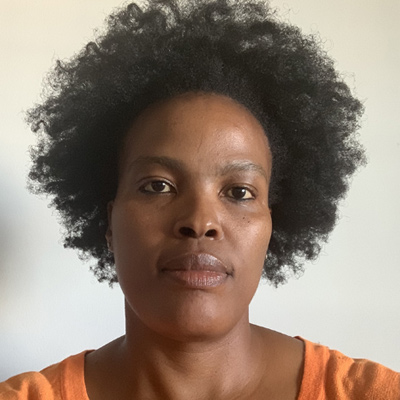
Siyabonga Mngoma
Communication & Marketing

Sheryl Ozinsky
Market Development for PGS
Create opportunities for PGS producers to link directly to local customers and earn fair prices for the fruits of their labour by selling direct.

Brett Sander
Organic Value Chain Development
Developing the organic value chain with vertical integration, scope for regional hubs and enhance public-private collaboration. Raise awareness of PGS among governments, local authorities, development partners, SME’s and local NGO’s to encourage them to invest in PGS. The establishment of the organic trade desk is the outcome of this working group.
Fola Yusuf
EOA Farmer Support & Advisory

Audrey Wainwright
Certification
Supporting PGS groups and their farmer members by creating PGS friendly policies and enabling frameworks ensuring alignment to the SAOSO Standard for Organic Production and Processing and context specific for PGS groups.

Matthew Purkis
EOA Technology
The group focuses on the roll-out of the technology suite that is in development for the mapping and data collection process to inform the farmer support and market development working groups. The aggregated data will assist in future fundraising and program development to connect provincial supply chains. The technology is a central component to the role out of Organic 3.0 and digital value chains.

Edmore Parichi
Seed
Create a PGS seed bank for accredited PGS farmers to draw from. Special focus on indigenous seed; document seed catching mechanisms; treatments to improve seed and seedling health. This group is focused on developing the provincial networks with the main goal to establish seed banks within PGS groups and wider agricultural networks. Seed sovereignty is the main objective of this working group.

Busisiwe Mgangxela
EOA Farmer Support & Advisory
Providing technical support to farmers from best practice organic methodology, organic growing innovations and traditional knowledge to land design, production, market access, training and monitoring the impact in the field of PGS and standards. Strengthen capacities of stakeholder farmers to ensure the flow of information and use of new technologies, and organic best practice.

Daniel Moody
EOA Technology
The group focuses on the roll-out of the technology suite that is in development for the mapping and data collection process to inform the farmer support and market development working groups. The aggregated data will assist in future fundraising and program development to connect provincial supply chains. The technology is a central component to the role out of Organic 3.0 and digital value chains.
Rosah Ramaipadi
Seed

Raymond Auerbach
Policy Research
Raymond has been farming organically in KwaZulu-Natal for 40 years and has had an active background in soils, trees, farmer training and agricultural research techniques.
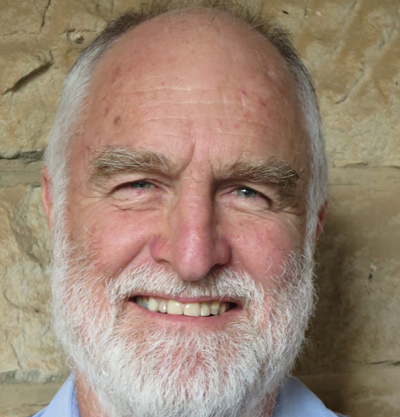
Noel Oettle
Research & Education
This group will be focused on furthering the research agenda for the organic sector. Working closely with universities and other institutions such as ARC to bring organic into the mainstream.

Justice Lubobo
Fundraising
This group will focus on fundraising activities for the future of PGS SA and SAOSO. It will be working closely with steering committee members and all the WGs (and their specific fundraising requirements) to develop funding proposals and screening potential funders and linking the proposal to potential funding mechanisms.
Matt Purkis
Governance
Matters of governance for both PGSSA and SAOSO to ensure that their constitutions correctly serve the organisations.
Alan Rosenberg
Governance
Our Partners
PGS SA and SAOSO working with selected sector partners offer training courses to teach farmers about organic farming and take them through the Organic Farmer Journey to set them up as a PGS group. Contact us to develop your customised training package.
PGS SA promotes the development of organic farmer organisation (OFO) in collaboration with INOFO South Africa and the seeding of grassroots PGS groups through the PGS Pollinator and Champion Programmes. PGS SA is focused on growing the grassroots movement of agroecological producers to take ownership of our role in growing the economy of South Africa.
PGS SA in collaboration with SAOSO and the organic sector working groups are developing knowledge resources to help farmers on the organic journey.
PGS SA promotes and supports the principles of organic agriculture as defined by the worldwide umbrella organisation for the organic agriculture movement, the International Federation of Organic Agriculture Movements (IFOAM). IFOAM supports the development of PGS within the region and advocates for the recognition of PGS by governments.
To expand the awareness and uptake of organic farming methods, PGS SA in partnership with the South African Organic Sector Organisation (SAOSO) is training and supporting 20 Pollinators or community practitioners to establish new PGS groups in South Africa. This programme is supported by the Knowledge Hub for Organic Agriculture in Southern Africa (KHSA).
The South African Organic Sector Organisation (SAOSO) is a non-profit organisation focused on growing the organic agriculture sector in South Africa. Their work unites farmers, producers, retailers and consumers of organic products to collectively protect the future food freedom and natural ecology of South Africa, and their strategy is aligned with PGS SA.
The Knowledge Hub for Organic Agriculture in Southern Africa (KHSA) is part of the Knowledge Centre for Organic Agriculture in Africa (KCOA), a collaborative country-led partnership funded by the German Federal Ministry of Economic Cooperation and Development (BMZ) and implemented by the Deutsche Gesellschaft für Internationale Zusammenarbeit (GIZ) GmbH and non-governmental organisations across Africa. The KCOA aims to scale up adoption of sustainable farming practices through five knowledge hubs in Africa. The other hubs are implemented by GIZ with in-country partners in North, West, East and Central Africa. The South African-based Sustainability Institute supports project implementation in Zambia, Namibia, Malawi and South Africa. SAOSO and PGS SA lead on activities in South Africa.
Philippi Agrihub was launched in 2018 to support small-scale and emerging farmers by facilitating their access to value-add services and markets.
All their farmers receive training to grow organic produce and develop their business skills; PEDI is supplied by over a 100 farmers from the Cape Flats as well as its own farm. The certification of farmers in the Cape Flats PGS on which PEDI forms part is ongoing.
Matt is passionate about youth development, sustainable human settlements, and working towards a sovereign, ethical and fair food system.
Butshabelo is passionate about agroecological practices that feed the nation with nutritious and healthy food. Her mantra is: “Let us save our Mother Earth for the Seventh Generation.”
Raymond has been farming organically in KwaZulu-Natal for 40 years and has had an active background in soils, trees, farmer training and agricultural research techniques. Post-1994, he worked with government on strategies for transformation and land policies, while finishing his MSc on sustainable farming systems. His doctorate focused on integrated catchment management.
For the past decade, he has been teaching soil science and plant production at Nelson Mandela University where he has started a long-term research trial comparing organic and conventional farming systems. He works with students across Africa, collaborates globally with researchers and is focused on climate resilient agriculture.
Previously Sasha worked for the United Nations as a climate change consultant and has been involved in extensive research on global agricultural trends and how these affect Africa’s farmers. Her ongoing advocacy research for pan African organisations focuses on resisting the agrochemical and biotechnology push onto the continent. She is also part of the #Unpoison initiative that seeks to address the issue of agro-chemical capture in South Africa.